
Week 5 Mini Photography Project-
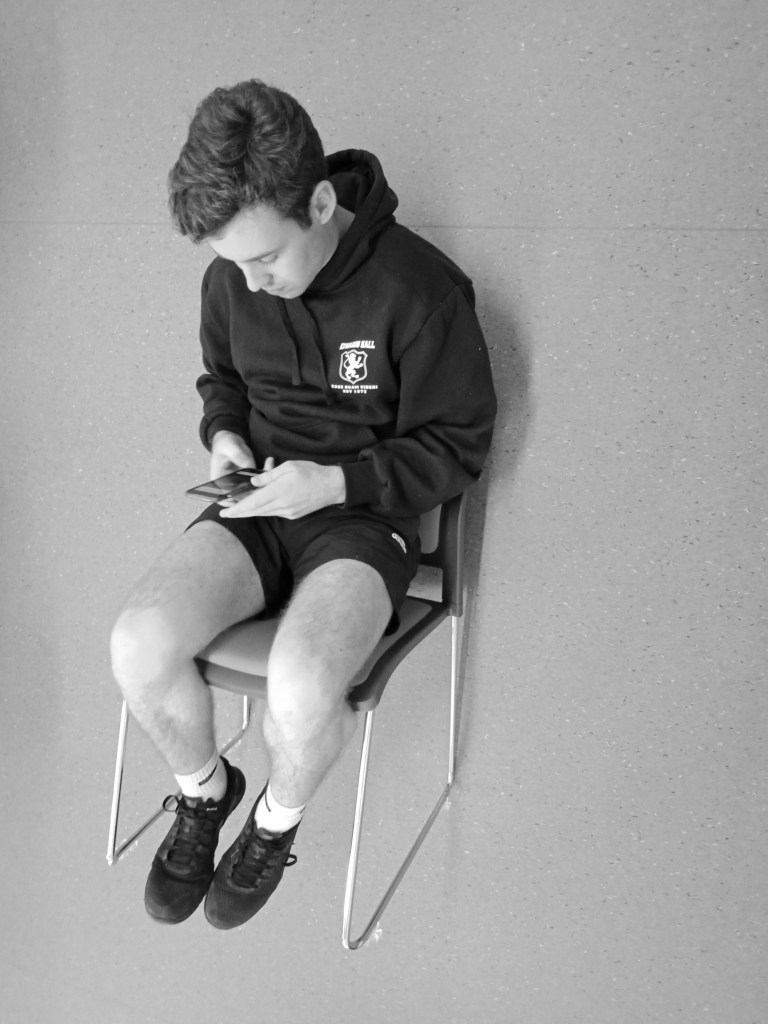
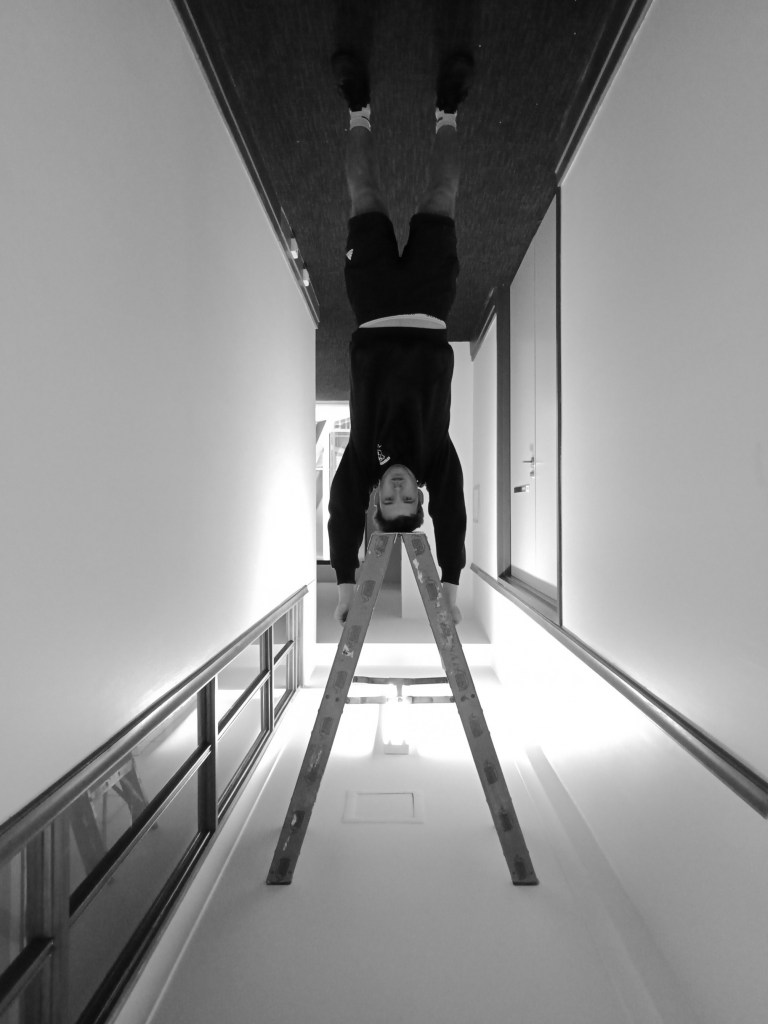
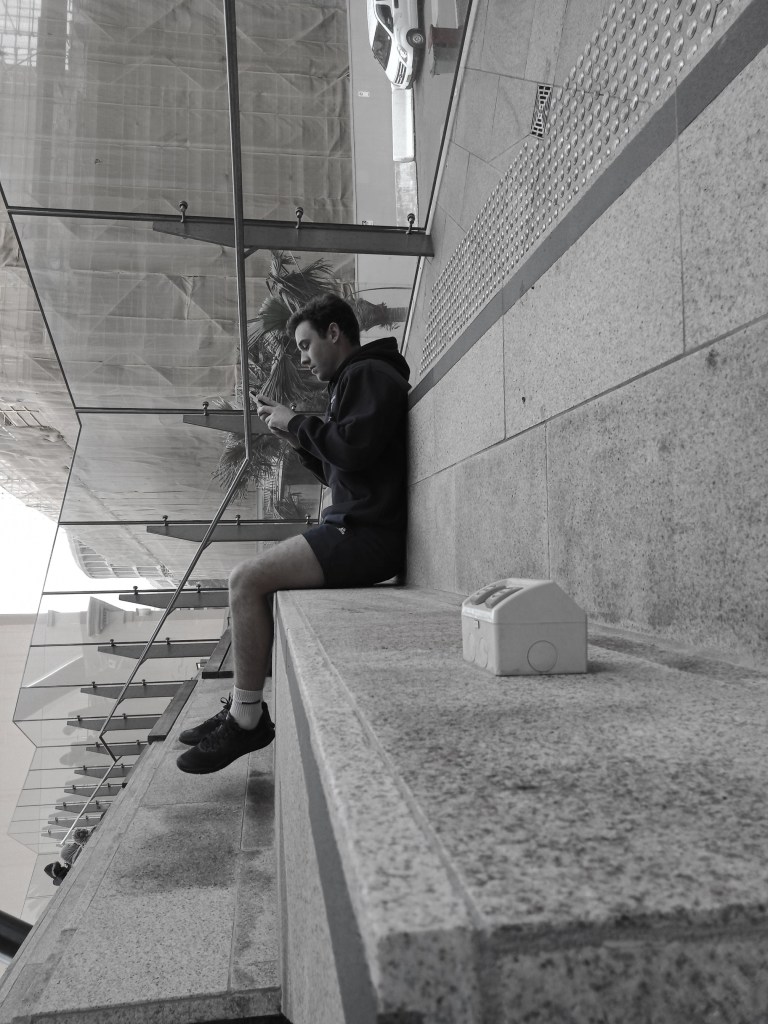
The photograph manipulation I think went well, simply executed but the ideas came from Morgan- the subject of the photos.
Week 5 Mini Photography Project-
The photograph manipulation I think went well, simply executed but the ideas came from Morgan- the subject of the photos.
Sontag: Melancholy Objects
These two reading helped my understanding of photography and its relationships with art and thus design as well. Sontag’s discussion of the history of photography throughout the reading and how it was interpreted by artists and their movements was important in giving me an understanding of how movements, designers and politics have viewed photography in relation to art.
“Photography has the unappealing reputation of being the most realistic, therefore facile, of the mimetic arts.” Sontag suggests throughout the reading photography was seen as a simple census taker without any real purpose in art to most. However the modernist movement adopted the new technology and was keen to try and capture the ‘essence of life’. -This was the idea of capturing something real and not staged such as the Tong War in Chinatown New York City.
This movement was mainly concentrated in major urban centers such as London, New York and Paris as they allowed for a dissection of society, with people of every class in a concentrated, record-able space. An example of this is Sanders who created a book that documented people of many areas of society including models, circus people and those of each different class. However he still maintained the ideal of trying to capture the ‘typical’, with the gazes of the subjects not direct, revealing he didn’t ant them to know he was taking a picture.
This brings into the discussion the political ideas of the the reading with parties such as the Nazi’s having their own view on photography’s relationship with art. Sander’s work was impounded and destroyed as it was believed to be: “an impassive census-taker, the completeness of whose record would render all commentary, or even judgment, superfluous. This brings into the discussion the political ideas of the the reading with parties such as the Nazi’s having their own view on photography’s relationship with art.”

Barthes- ‘Camera Lucida’
Barthes discusses the classification and ideas of photography. Classification includes the empirical (Professionals I Amateurs), or rhetorical (Landscapes I Objects I Portraits I Nudes), or else aesthetic (Realism I Pictorialism). Like Sontag, Barthes explores the objectivity of photography, discussing how photography serves as documentation but can also be seen in a metaphorical sense: “I am looking at eyes that looked at the Emperor.” pg 1.
Barthes conveys his frustration with books and literature on photography, with their focus being on either, the history, ideas of the picture in a too broad or too magnified lens.
The “singular adherence makes it difficult to focus on the photography”, pg 6, Barthes suggests than many overlook the idea of what the photograph actually is, rather than what it is saying with people unable to understand his pleasure and view of looking at that of Napoleon for example, through the eyes of someone who was actually there.
IS PHOTOGRAPHY ART?
The reading was important to my understanding of the discussion as to whether photography is a part of art and design. Although commonly used in many aspects of design, its relationship with art has always been difficult, with many believing it not to be art but simply documentation. The Nazi’s were a more radical group against photography being seen as art as discussed in the reading, other groups included
Research for my Pecha Kucha:
For my Pecha I have decided to do mega-structures and why designs of such magnitude are created. It is believed that Fumihiko Maki, a prominent Japanese architect, invented the term in the 60’s to describe large projects, this means it could be many things. However today the Oxford definition is “a massive construction, especially a complex of many buildings.” Lexico 2019.
Some examples I may include are: The Eiffel Tower, the Pyramids, The Burj Khalifa in Dubai and also the design- X-Seed 4000, which is a 4 kilometer tall building designed by a Japanese company: The Taisei Construction Corporation as a sustainable vertical city.
Eggcellent egg exercise


The first image is of my individual work on a universal Isotype for how to boil and egg. It was clear overall as to the steps needed to boil an egg however our group was able to simplify the steps and add in the cooling and peeling process. Universal symbols of fire, water boiling and time were carried over from my Isotype and I was put in charge of illustration.
Susan Kare is an example of this use of universal language with her work on the early symbols for the Apples Macintosh seen below. Although not so much information display they do represent the idea of universal understanding, with there being no need for translation to other languages, as the images serve as their own language.
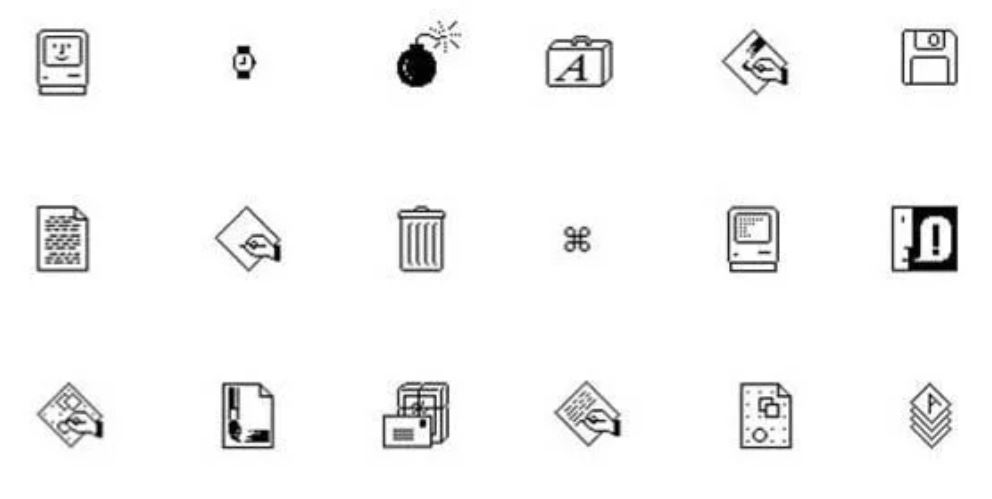
Design Inspiration, n.d., ’40 Crucial lessons from the most famous graphic designers in history’, accessed 18 August 2019, https://www.canva.com/learn/famous-graphic-designers/
It is useful to see hwo different designers have used and unerpreted this idea. The use of pictures as language explained through the reading, group work and this research shows how as a designers it is important to understand univerisal language and how to communication your design to a wider audience. The use of this type of communication on public transport is a key area of this design, it can also be seen in car parks (disabled parking, pedestrian crossing), emergency exits, etc.
It can also help with product branding and symbols, for example, the hammer and sickle of the USSR, although not information display, its universal meaning as a farm tool, and the hammer and industrial tool makes it a powerful icon.
Christopher Burke presents an interesting design idea known as the Isotype: International System of TYpographic Picture Education.
The reading explains the idea of universal language and how that can be achieved with pictorial designs rather than typography. The universality of information was a key driving force in the Isotype’s creation as the socialist government in ‘Red’ Vienna, Austria, wished to increase the public’s understanding of taxes and governmental practices. Otto Neurath, the lead designer, “described the goal of Isotype as ‘to present so many charts and models that everybody gets sufficient material for visual argument’ (Neurath, 2010). “
This reading, like that of week 2 and 3’s convey’s how the politics, historical events and ideas of the time greatly influence design. This is seen with Red Vienna, a socialist government wishing to involve all citizens with the Isotype. This political view is challenged and changes however and the designers are exiled to the UK, Africa and the U.S., thus influencing the design with new ideas and attributes.
It must be noted that not all information can be displayed or presented simply through the graphs and displays of the Isotype. Neurath, “believed that it is a mistake to think that we can ever possess all possible information for enabling us to make the single, correct decision about anything;”
To this end the Isotype is an important exploration of information design. Its influences can be seen today in the graphs and pictorial displays of today such as in train station maps.
Why is this discussion useful to my understanding of design?
Modernism was largely driven by a shortage of resources after WW1 and a strive the use in way that could “emphasis on volume, asymmetrical compositions, and minimal ornamentation”. (1)
A large area of design focus for this movement was on architecture and minimalising decoration with the idea that less is more.
A great example of modernism is the Sydney Opera House, this was a surprise to me as I presumed it was more art deco. The importance of understanding these design ideas and their values is why we have these readings. From this reading I now understand why these buildings are the way they are, some of my grandparents furniture is seemingly modernist in its design however made after modernism was really used as a design aesthetic, meaning even after the idea has died it can still influence the designs if today including my own current and future work.
(1) https://www.architecture.com/explore-architecture/modernism
Woodman’s reading discusses the history, values and ideals of modernism and how it has changed and adapted over the century. He describes modernists as the creators of a ‘machine age aesthetic’ as the newly industrialised world of Europe and America began exploring new artistic and technological avenues.
Modernism also sought to expand the idea of art from the traditional hierarchy of the art galley, exploring such things as form over function. This was seen in the domestic theatre of design for example the ‘Interior of Schroder House’ on page 37. The chairs, matching the very geometric style of the room have used form over function in their design with the chair looking very uncomfortable.
A key location of note is Germany between the World Wars with the Bauhaus under the ‘Weimar Culture’, playing a key role in the modernist movement’s expansion.
I researched further into this movement- The fascist government removed such movements for being “degenerate art” (Burns L, 2013) in the 1930’s with all aspects of art and culture being ‘Nazified’ to allow Hitler’s government better control over public exposure to external cultures.
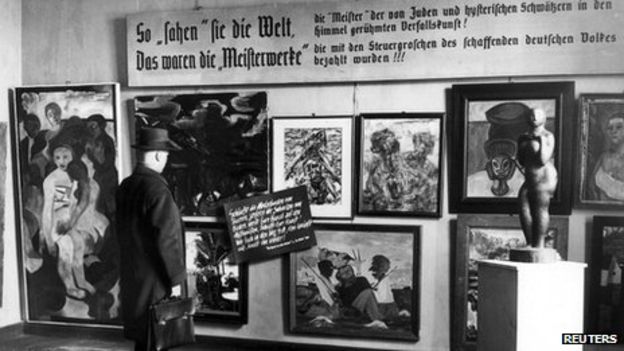
Burns L, 2013, BBC, ‘Degenerate art: Why Hitler hated modernism’, accessed 12 August 2019, https://www.bbc.com/news/magazine-24819441
Propaganda was an area influenced by this institution as well as new architecture and also home decor/utensils. The later part of the readings explores the modernists exploration of the home and its functionality. An example of this is the production of home ware that created heated debates between traditionalists, functionalists and the public as seen on page 57.
Although a long read, Woodman effectively discussed modernism, and how the politics, location, culture and public opinion greatly influence design movements and ideas.
How what was discussed helps my understanding of design.
Through understanding the historical, events, processes and ideas of previous design movements, designers, inventions and innovations I can understand how we have come to have the design ideas we gave today. Eskilon’s explanation of how the colonial and imperial era and values influenced design is important to know. All history is important I believe and the more of it I know the better. The knowledge gained about different movements and styles will inevitably help me with my future in design with my degree.
On page 32 he also mentions that there was some early use of photography as war documentation in the Crimean war. This aspect was interesting to me as it is an area of design I have always wanted to explore; how it interacts with war.
Independent research: War photography started around the time of the american civil war and the Crimean war, with the earliest known photography of an actual battle taken in 1870 during the Franco/Prussian war. This new technology was used as documentation and for public exposure to the idea of war, with the black and white images used in newspapers.
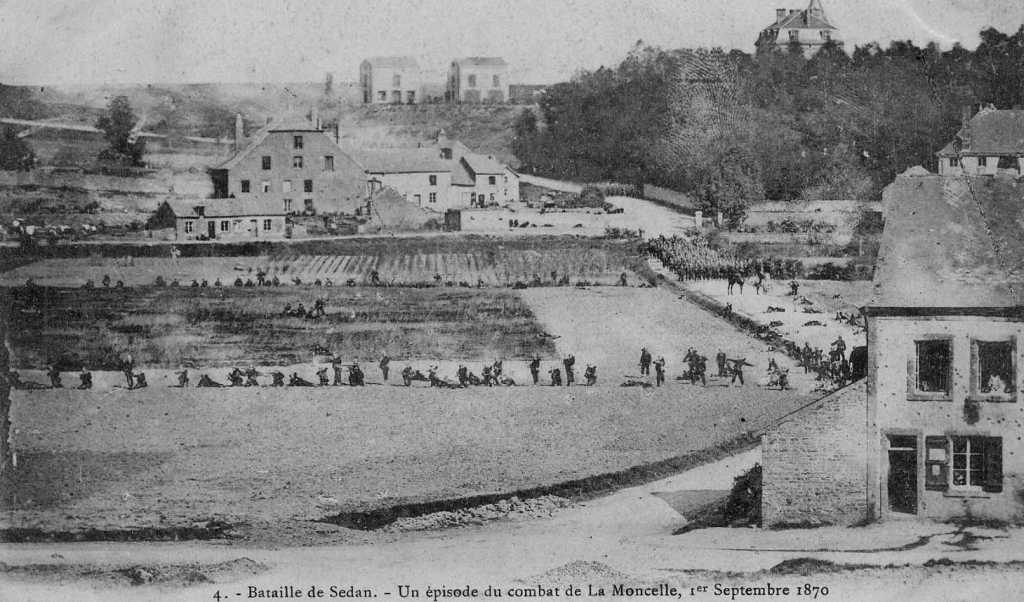
How Early Photographers Captured History’s First Images of War
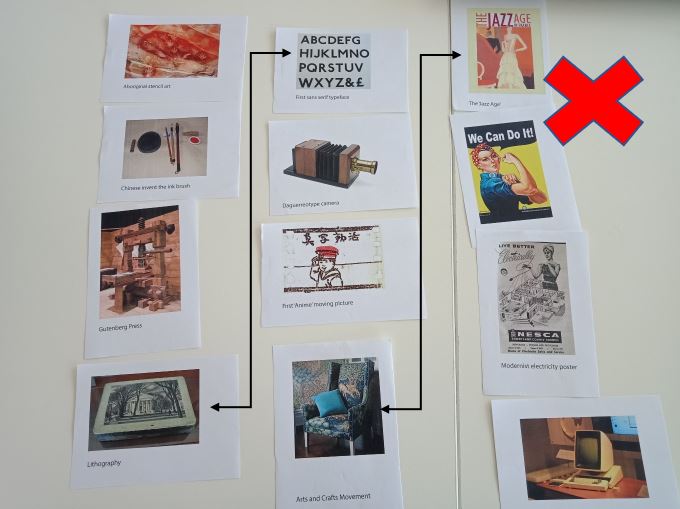

After two attempts my group managed to successfully create the correct timeline. The aim of the group game was to create a timeline that showed our understanding of the different design technologies, inventions and styles. It also tested our understanding of were these design ideas sit in the course of human history.
 Yeah Nah Nah Yeah