
Woodman’s reading discusses the history, values and ideals of modernism and how it has changed and adapted over the century. He describes modernists as the creators of a ‘machine age aesthetic’ as the newly industrialised world of Europe and America began exploring new artistic and technological avenues.
Modernism also sought to expand the idea of art from the traditional hierarchy of the art galley, exploring such things as form over function. This was seen in the domestic theatre of design for example the ‘Interior of Schroder House’ on page 37. The chairs, matching the very geometric style of the room have used form over function in their design with the chair looking very uncomfortable.
A key location of note is Germany between the World Wars with the Bauhaus under the ‘Weimar Culture’, playing a key role in the modernist movement’s expansion.
I researched further into this movement- The fascist government removed such movements for being “degenerate art” (Burns L, 2013) in the 1930’s with all aspects of art and culture being ‘Nazified’ to allow Hitler’s government better control over public exposure to external cultures.
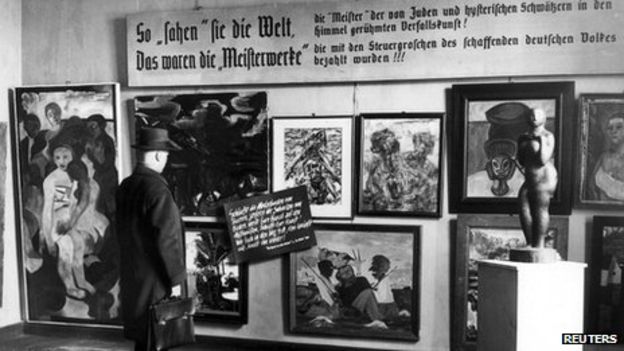
Burns L, 2013, BBC, ‘Degenerate art: Why Hitler hated modernism’, accessed 12 August 2019, https://www.bbc.com/news/magazine-24819441
Propaganda was an area influenced by this institution as well as new architecture and also home decor/utensils. The later part of the readings explores the modernists exploration of the home and its functionality. An example of this is the production of home ware that created heated debates between traditionalists, functionalists and the public as seen on page 57.
Although a long read, Woodman effectively discussed modernism, and how the politics, location, culture and public opinion greatly influence design movements and ideas.
 Yeah Nah Nah Yeah